
Volkswagen Remapping – Models, Engines and Typical Gains
A Stage 1 remap on a turbocharged VW typically adds around 25-35% more BHP. Torque rises by roughly 20-30% on TDI diesels and 25-35% on TSI petrols. Non-turbo petrol engines gain much less, usually under 10%. It’s a software-only change made through the OBD port, adjusting boost, fuelling and ignition timing, with no physical parts fitted.

We hold verified Stage 1 figures for over 600 Volkswagen engine variants, from small hatchbacks through to the vans.
Model and Engine Specific VW Remap Data
Remap figures for individual Volkswagen models and engines:
VW Transporter
- T4 2.5 TDI (1999–2004)
88BHP, 102BHP, 150BHP - T5 (2003-2009)
86BHP, 105BHP, 130BHP, 174BHP - T5.1 (2009-2015)
102BHP, 114BHP, 140BHP, 180BHP - T6 (2015-2019)
2009-2015, 2015-2018, and - T6.1 (Euro 6.2)
VW Golf and Golf GTI
1991-1997, 1997-2003, 2003-2008, 2009-2012, 2012-2016, 2017-2019
- MK3 (all), MK3 GTI
- MK4 (all), MK4 GTI
- MK5 (all), MK5 GTI
- MK6 (all), MK6 GTI
- MK7 and MK7.5 (info); MK7 (all), MK7 GTI
- MK7.5 (all), MK7.5 GTI
- MK8 (all).
VW Caddy
More curated model and engine links will be added here in coming weeks and months! In the meantime, checkout the full vehicle search to quickly find typical ECU remapping gains.
Why Volkswagen Tops the UK ECU Remapping Charts
Volkswagen is one of the most remapped makes on UK roads. Daily drivers in a Golf or Polo, family haulers in a Tiguan and workhorses like the Caddy and Transporter tend to share the same thing under the bonnet: a turbocharged engine with software headroom the factory left unused.

That headroom exists because Volkswagen often uses the same engine across several trim levels and fleet tax bands, then turns the power down in the ECU to separate them. A Stage 1 remap adjusts boost pressure, fuelling and ignition timing through the OBD port, bringing output closer to what the higher-powered version of that engine already produces elsewhere in the range. Nothing gets unbolted.
The ranges on this page cover the middle of our verified VW data, so a handful of standout results at either end don’t skew them. Some tuner websites lead with ‘up to 40%’ or more, and a few VW engines do get there. Most don’t.
We’d rather quote what most owners can realistically expect than the best run a dyno ever had on a good day.
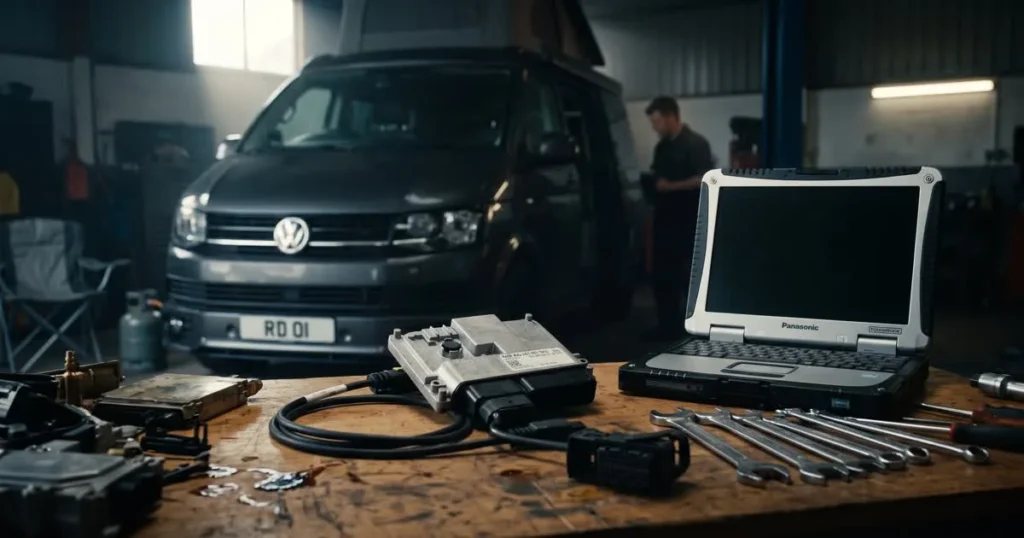
Typical Stage 1 Gains by Engine Type
Turbo-diesel (TDI)
A realistic Stage 1 gain sits around 25-35% BHP, with torque up by roughly 20-30%. In percentage terms torque rises slightly less than power, but it’s the gain you’ll notice most.
The extra torque arrives lower in the rev range, so you drop gears less often on a motorway incline and towing gets noticeably easier. On VW’s TDI engines, torque is the figure that matters most, particularly for van and towing use.
Turbo-petrol (TSI)
Expect a similar 25-35% BHP gain, with sharper throttle response and a stronger mid-range through the gears. Torque gains are in the same region, typically 25-35%.
Fuel economy
Under steady, like-for-like driving, some owners see a 5-15% MPG improvement because the engine doesn’t have to work as hard to hold cruising speed. Use the extra power at every opportunity and that saving disappears fast. It depends entirely on how you drive afterwards, so treat it as a possibility rather than a promise.
These are typical ranges for the engine family as a whole. Exact gains vary by engine code and generation, and verified figures for each variant are on the model and engine pages listed above.
Clutches, Gearboxes and Emissions
Manual clutches can slip if a map pushes torque in too hard at low revs, so a well-calibrated file brings the power in smoothly. On automatic models (DSG on most VWs), pairing the engine remap with a TCU remap raises the gearbox’s torque limiters, speeds up shifts and stops it changing up too early.
A quality Stage 1 file leaves all factory emissions equipment in place, DPF and catalytic converter included, so the car stays road legal and should pass its MOT smoke and emissions checks. A car with an existing emissions fault will still fail, remap or no remap.
Warranty, Emissions and Other Considerations
VW dealer diagnostic equipment can detect a remap through a TD1 marker, even after the ECU has been flashed back to standard. That can affect any powertrain warranty claim you make while the car is still covered. You also need to declare the remap to your insurer, because an undeclared modification can give them grounds to refuse a claim.
More curated model and engine links will be added here in coming weeks and months! In the meantime, checkout the full vehicle search to quickly find typical ECU remapping gains.
Before You Remap Your VW: Gains, Warranty, MOT and Insurance
How much BHP does a Stage 1 remap add to a VW?
Most turbocharged VW engines gain around 25-35% more BHP from a Stage 1 remap, based on our verified data for over 600 Volkswagen engine variants. Torque typically rises by 20-30% on TDI diesels and 25-35% on TSI petrols. Non-turbo petrol engines gain much less, usually under 10%.
Is remapping a VW diesel worth it for towing?
For most TDI owners who tow, yes. The extra torque arrives lower in the rev range, so the engine pulls a caravan or trailer up a motorway incline without dropping a gear as often. A remap doesn’t change your legal towing limit, which stays as stated on the VIN plate.
Will a remap void my VW warranty?
It can affect it. VW dealer diagnostic equipment can detect a remap through a TD1 marker, even after the ECU has been flashed back to standard. The manufacturer can then refuse powertrain claims on parts the remap could have affected, so check your warranty terms before you book.
Do I have to tell my insurer my VW has been remapped?
Yes. A remap is a modification, and UK insurers expect you to declare it. If you don’t, your insurer can refuse a claim or cancel the policy, and some will raise your premium or decline cover once you tell them.
Will a remapped VW pass its MOT?
A remapped VW should pass its MOT if the Stage 1 file leaves all factory emissions equipment in place, including the DPF and catalytic converter. A missing or tampered DPF has been an MOT failure since February 2014, whatever software the car is running. A remap won’t fix an existing emissions fault either, so a tired DPF will still fail.
Does remapping a VW improve fuel economy?
It can, under the right conditions. Some owners see a 5-15% MPG improvement on steady, like-for-like driving, because the engine works less hard to hold cruising speed. Use the extra power often and that saving disappears.
Do I need a DSG remap as well as an engine remap?
Not always, but it’s worth considering on an automatic VW. A TCU remap raises the gearbox’s torque limits, speeds up shifts and stops it changing up too early, which helps the DSG cope with the extra torque. Ask your tuner whether the engine map will go beyond your gearbox’s standard torque limit.
Can a VW remap be reversed?
Yes. A reputable tuner saves your original ECU file and can flash it back through the OBD port. The car will run on standard software again, but VW diagnostic equipment can still detect that the ECU has been reprogrammed.